Crawl Space Encapsulation Specialist Moore County, NC
Moore County sits on the seam between the Carolina Sandhills and the Piedmont, and that geology shapes nearly every crawl space in the area. Homes in Pinehurst, Southern Pines, and Aberdeen rest on the rapidly draining sands of the Pinehurst Formation, while properties toward Carthage and Robbins sit over the expansive Triassic clays of the Deep River basin — two very different moisture problems under one county. Add a humid subtropical climate that routinely pushes crawl space humidity past 60 to 70 percent, a housing stock where most homes predate modern closed-crawl codes, and aggressive Eastern subterranean termites foraging through longleaf pine duff, and the result is a region where vented dirt crawl spaces struggle to stay dry. This site is a homeowner’s guide to understanding what’s happening under a Moore County home and the options for fixing it.
Contact Us
Moore County, NC Crawl Space & Moisture Management
We focus on professional crawl space encapsulation and foundation moisture control. We help address high humidity, damp insulation, and vapor barrier issues across Moore County, NC. Anything you need related to moisture management, we can help coordinate effective solutions for your Moore County home.
The crawl space is a critical part of your home’s structure. You need your home to be a safe, dry environment for your family, so you are going to want reliable and effective foundation services. Finding a leading crawl space encapsulation contractor in Moore County, NC is the first step toward a healthy home.
About Us
The work covers the full range of crawl space moisture control: full encapsulation, vapor barriers, dehumidification, mold remediation, drainage, and insulation. Because no two crawl spaces fail the same way, the starting point is always an inspection of the space itself — its soil, moisture readings, drainage, insulation, and any existing damage — rather than a one-size package. From there, homeowners get a clear picture of what’s driving the problem and which combination of services addresses it. The emphasis is on fixing the moisture source, not just covering symptoms, so the crawl space stays healthier over the long run.
Our Services
Crawl space encapsulation, moisture control, and repair for homes across Moore County, NC.
Crawl Space Encapsulation
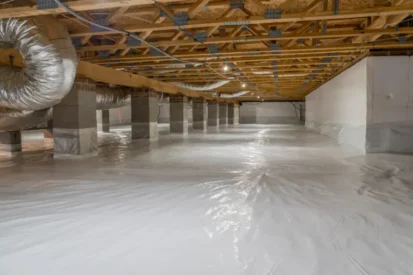
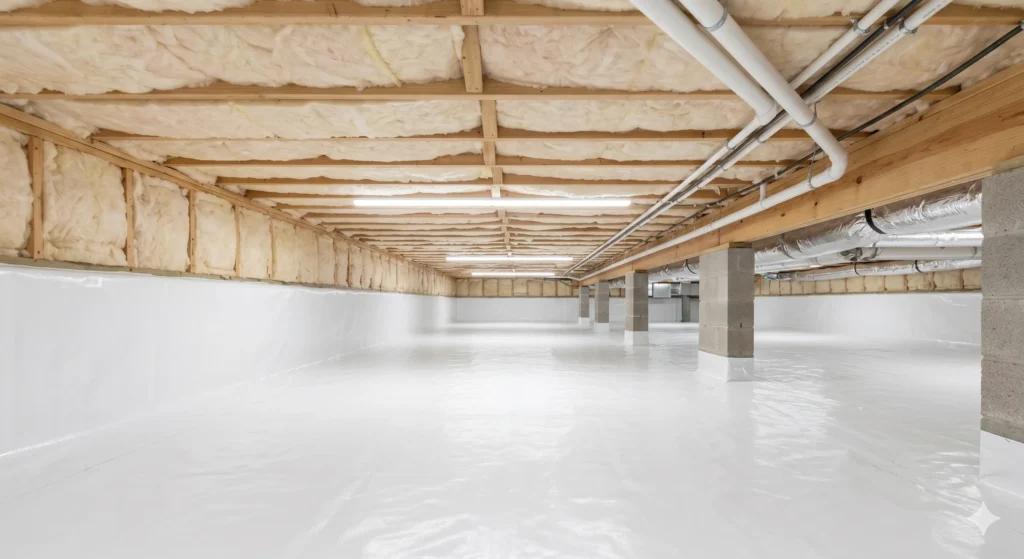
Crawl space encapsulation seals the space under your home off from the ground and outside air, bringing it inside the home’s conditioned envelope. A heavy-duty liner covers the soil and runs up the foundation walls and piers, the vents are sealed, and a drying mechanism keeps humidity in check. In Moore County, it’s the most complete answer to the region’s core problem: humid Sandhills summer air condensing on cool sub-floor framing, and ground moisture wicking up through sandy or clay soils. It’s especially relevant for the county’s many pre-1990 homes, built when letting the crawl space breathe was standard practice. Encapsulation replaces that outdated approach with a sealed, dry foundation that resists mold, wood decay, and the musty air that drifts upstairs.
Dehumidification & Moisture Control
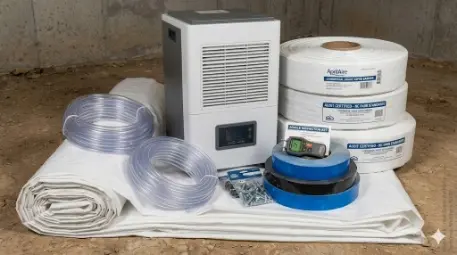
Dehumidification is the active part of crawl space moisture control, the piece that handles the humidity a liner alone can’t. Sealing the ground and vents stops new moisture from coming in, but a sealed Moore County crawl space still needs a way to pull existing humidity out of the air and hold it down, especially through the region’s long, muggy summers. A dedicated, crawl-space-rated dehumidifier does exactly that, keeping relative humidity below the level where mold grows and wood stays damp. It’s not a portable unit from a hardware store; it’s a commercial dehumidifier sized to the space, drained automatically, and set to maintain a target humidity year-round. Under NC’s closed-crawl code, that mechanical drying is required, not optional.
Vapor Barrier Installation
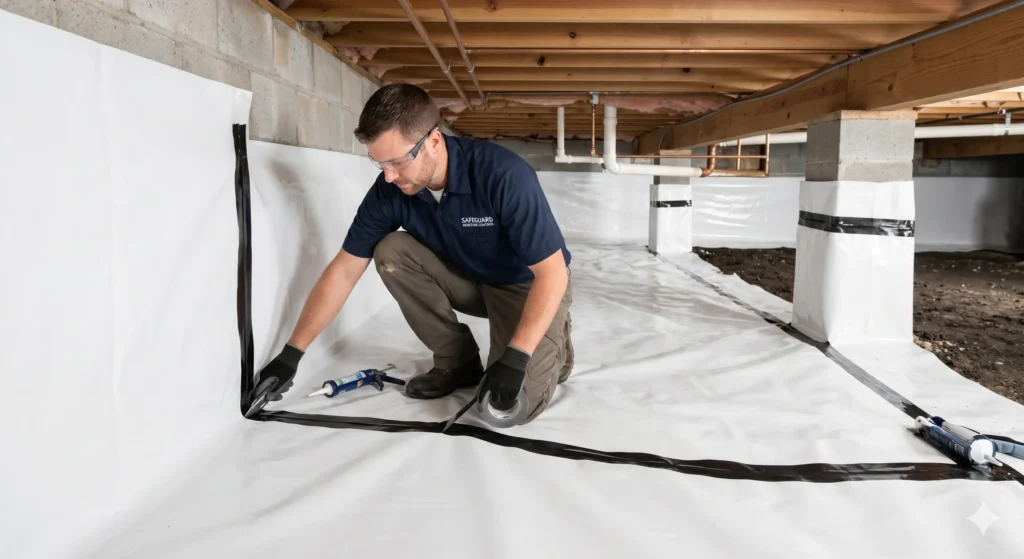
A vapor barrier is the layer that stops moisture from rising out of the bare earth in your crawl space. In Moore County, even the fast-draining sands of the Pinehurst Formation stay damp below the surface, and that ground moisture evaporates upward continuously, feeding the humidity that rots framing and feeds mold. A proper vapor barrier, not the thin, torn 6-mil sheet found in many older local homes, covers the soil and is sealed to the foundation walls and piers to interrupt that capillary path. It’s a foundational step in moisture control: on its own for drier spaces, or as the ground layer of a full encapsulation. For many of the county’s pre-1990 crawl spaces, replacing a failed barrier is the first real improvement.
Crawl Space Insulation
Crawl space insulation affects both comfort and energy bills, and in many Moore County homes it’s failing. The pink fiberglass batts stapled under the subfloor in older houses absorb the region’s humidity, grow heavy, and sag or fall onto the dirt, where they do nothing but hold moisture and harbor pests. Proper crawl space insulation, installed as part of a dry, sealed space, keeps floors warmer in winter, eases the load on the HVAC system, and helps hold steadier indoor temperatures. The right approach depends on whether the crawl space is vented or sealed: in a modern closed crawl, insulation typically moves to the foundation walls rather than the subfloor. Done correctly, it’s also where Duke Energy’s efficiency rebates can come into play.
Mold Remediation
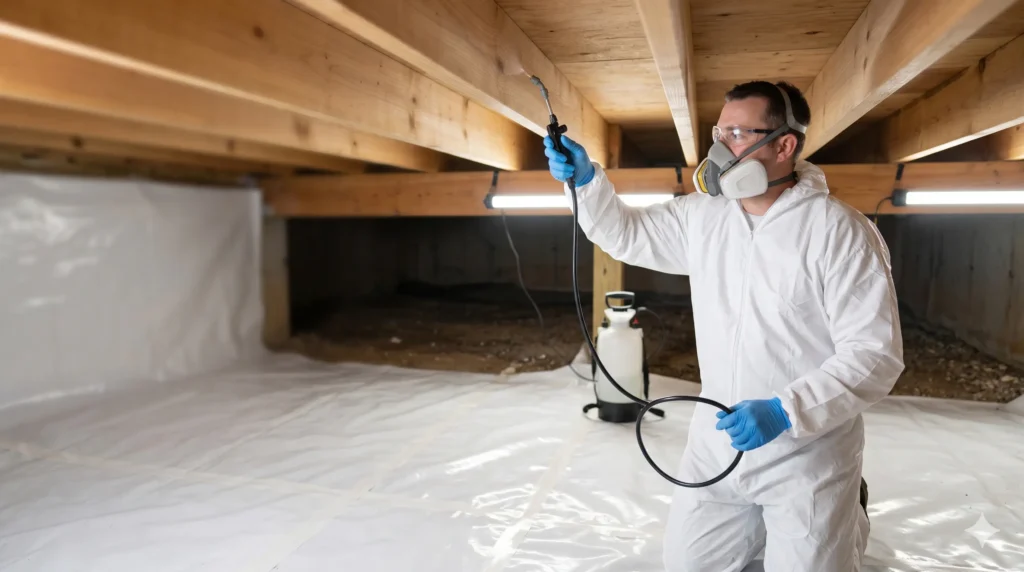
When a crawl space stays damp long enough, mold follows, and in Moore County’s humid climate it’s one of the most common reasons homeowners first look under the house. Mold colonizes framing once sub-floor humidity sits above about 60 percent and wood moisture climbs past the high teens, leaving the black, green, or white growth found on joists and subfloors in many older local homes. Remediation removes that growth safely and, just as importantly, addresses the moisture that caused it. Cleaning mold without fixing the source only buys time. Because the stack effect carries crawl space air upward into living spaces, crawl space mold isn’t just a structural issue; it’s an indoor-air-quality one that can aggravate allergies and asthma upstairs.
Foundation Code Compliance
We help coordinate assessments and technical guidance to keep your crawl space aligned with NC Residential Code R409 unvented crawl space standards, which govern how sealed crawl spaces must be conditioned in Moore County properties.

Signs of a Foundation Moisture Problem
Most crawl space problems announce themselves upstairs long before anyone looks underneath. In Moore County’s humid summers, homeowners often notice hardwood floors that cup or feel spongy, a musty smell that drifts up through the vents, rooms that feel sticky even with the AC running, or worsening allergies and asthma. Others spot fiberglass insulation sagging or lying on the dirt, rusted HVAC registers, or higher-than-expected power bills. These are the visible signs of moisture moving up from a damp crawl space — and they tend to get worse, not better, when a vented crawl space is left to “breathe” through a Sandhills summer.
“How Do I Know?” Checklist
- Musty Odors: A persistent, earthy smell in the living area, often strongest near floor vents. This is caused by the “Stack Effect,” where warm air rises and pulls damp, mold-spore-heavy air from the crawl space into your home.
- Cupping Hardwood Floors: When the bottom of a wood floor board absorbs more moisture than the top, the edges curl upward. This is a primary sign of high humidity in the sub-floor.
- Sweating HVAC Ducts: Cold air running through metal ducts in a hot, humid crawl space causes chronic condensation. This “sweat” drips onto insulation and wood, leading to rot.
- Visible Growth & Mildew: White or gray fuzzy growth on floor joists or the paper backing of fiberglass insulation is a clear indicator that humidity is consistently above 60%.
- High Indoor Humidity: If your air conditioner is running but the house still feels “sticky” or humid, your crawl space is likely acting as a reservoir of water vapor.
Frequently Asked Questions
Can crawl space encapsulation increase my home’s value in Moore County?
It can help. In Moore County’s market — where many buyers order a WDIR inspection before closing — a dry, permitted, encapsulated crawl space removes a common red flag that a wet or moldy crawl space raises. Beyond resale, homeowners often report steadier indoor humidity and usable dry storage. A free inspection can tell you what your specific home would need.
Will sealing my crawl space trap radon gas inside my house?
It’s a fair concern, and one worth planning for. Most North Carolina counties have areas with elevated radon, so reputable encapsulation work in this region typically integrates active soil depressurization — a sealed PVC line under the liner that vents soil gas outside. Done that way, a sealed crawl space manages radon rather than trapping it. An inspection can include radon considerations for your home.
Do I still need a dehumidifier if my crawl space is encapsulated?
Usually, yes. Under NC Residential Code R409, a closed crawl space needs a way to control moisture mechanically, and a dedicated crawl-space dehumidifier is far more effective than the older practice of dumping HVAC supply air into the space. The liner stops ground moisture; the dehumidifier manages the humidity that remains. What size, if any, depends on your crawl space, which an inspection can assess.
Can I use a sealed crawl space for storage?
Often, yes. Once a crawl space is fully encapsulated with a heavy-duty liner and its humidity is mechanically controlled, the space stays dry enough that many homeowners use it for non-perishable storage, freeing up garage or attic room. Items that weren’t safe over bare, damp Sandhills soil become workable in a conditioned, sealed space.