Crawl Space Cure Moore County Service Areas
Crawl Space Cure Moore County serves homeowners across the county, from the golf communities of Pinehurst and the longleaf-pine neighborhoods of Southern Pines to the historic streets of Aberdeen, the county seat at Carthage, and the lake communities around Seven Lakes, Whispering Pines, and West End. Conditions shift as you move across the county — the sandy Sandhills soils in the south behave very differently from the heavier Triassic clays toward Robbins and the north — so local knowledge of where a home sits matters. Whether your home is a vintage cottage in Pinebluff or Cameron or a newer build near Foxfire, the service area covers Moore County’s towns and the unincorporated communities between them.
Communities We Serve
Pinehurst & the Sandhills
- Pinehurst — historic resort and golf-course homes on fast-draining Pinehurst Formation sand that still wicks moisture into large, complex crawl spaces, often worsened by heavy course and lawn irrigation soaking the soil around foundations.
- Southern Pines — longleaf-pine neighborhoods where deep pine duff and humid summers draw Eastern subterranean termites toward damp framing, making moisture and pest pressure the twin crawl space concerns.
- Aberdeen — vintage rail- and lumber-era homes on aging pier-and-beam foundations, where decades of humid air through open vents have left original framing prone to musty odors and slow decay.
- Pinebluff — century-old winter-resort wood homes built on vented crawl spaces long before vapor barriers, where generations of Sandhills humidity have left aging girders and joists vulnerable to decay.
- Taylortown — Pinehurst-adjacent homes on the same fast-draining sand, where steady ground-moisture wicking and humid summer air drive the area’s typical crawl space dampness rather than standing water.
- Jackson Springs — rural homes on highly permeable Sandhills sand that sheds rain quickly yet stays damp below, releasing ground moisture into older vented crawl spaces through humid summers.
The Lakes & Western Moore
- West End — rural lots near the Seven Lakes region where groundwater runs higher than the Sandhills average, keeping crawl spaces damp and leaving grading and on-lot drainage to do all the work.
- Seven Lakes — a lake-community retirement area on a high water table, where saturated soil keeps crawl spaces damp and the air rising into homes matters for residents’ comfort and health.
- Whispering Pines — lakefront homes around Lakes Thagard, Spring Valley, and Whisper, sitting over a high water table where moisture wicks up continuously and rain can pool beneath the house with nowhere to drain.
- Foxfire — custom golf-and-equestrian homes on larger lots, where heavy grounds and paddock irrigation can saturate the soil around foundations and keep crawl spaces humid even in dry spells.
Carthage & Northern Moore
- Carthage — the county seat, where the sandy Sandhills give way to slow-draining Triassic clay that holds water against foundations, so crawl spaces here often need drainage addressed before sealing.
- Robbins — northern Moore homes on the expansive Deep River Triassic clay, which drains slowly, swells when wet, and presses moisture through foundation walls long after a rain.
- Eagle Springs — rural, creek-bottom homes near the McLendon’s and Drowning Creek headwaters, where a high water table and seasonal flows keep low-lying crawl spaces damp.
- Vass — homes downstream of the Woodlake dam, where sensitivity to regional stormwater raises the risk of water intrusion and persistently damp crawl spaces after heavy rain.
- Cameron — the county’s oldest housing stock, on lumber-era pier-and-beam foundations where decades of humidity have made aging framing and subfloor repair a familiar reality.
Contact Crawl Space Cure Moore County
Our Services
Crawl space encapsulation, moisture control, and repair for homes across Moore County, NC.
Crawl Space Encapsulation
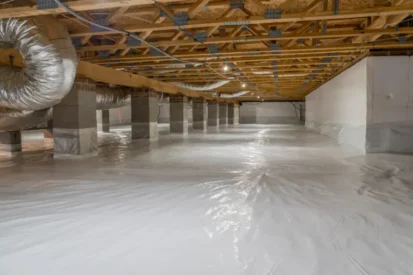
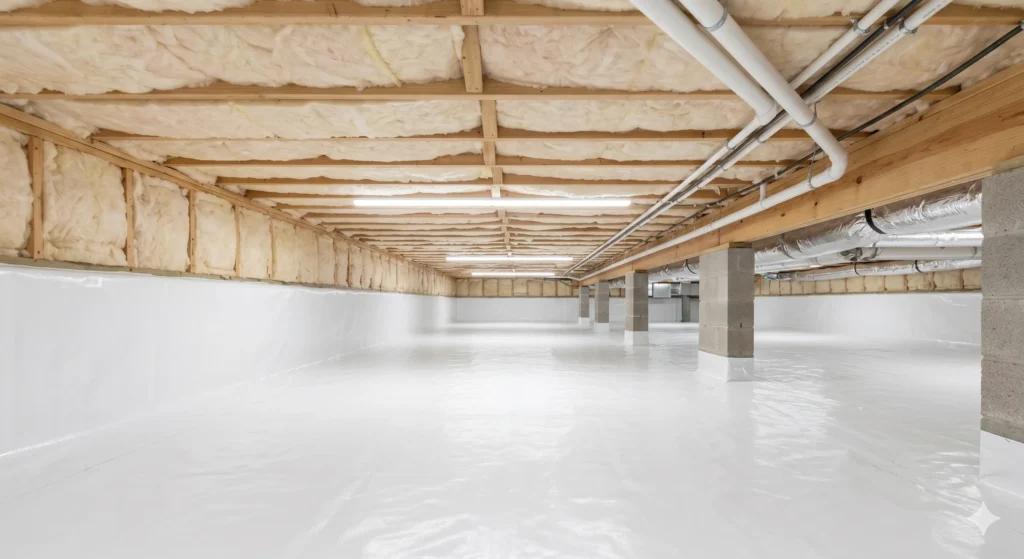
Crawl space encapsulation seals the space under your home off from the ground and outside air, bringing it inside the home’s conditioned envelope. A heavy-duty liner covers the soil and runs up the foundation walls and piers, the vents are sealed, and a drying mechanism keeps humidity in check. In Moore County, it’s the most complete answer to the region’s core problem: humid Sandhills summer air condensing on cool sub-floor framing, and ground moisture wicking up through sandy or clay soils. It’s especially relevant for the county’s many pre-1990 homes, built when letting the crawl space breathe was standard practice. Encapsulation replaces that outdated approach with a sealed, dry foundation that resists mold, wood decay, and the musty air that drifts upstairs.
Dehumidification & Moisture Control
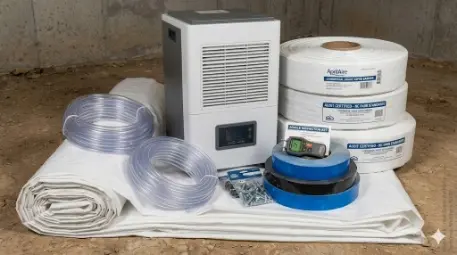
Dehumidification is the active part of crawl space moisture control, the piece that handles the humidity a liner alone can’t. Sealing the ground and vents stops new moisture from coming in, but a sealed Moore County crawl space still needs a way to pull existing humidity out of the air and hold it down, especially through the region’s long, muggy summers. A dedicated, crawl-space-rated dehumidifier does exactly that, keeping relative humidity below the level where mold grows and wood stays damp. It’s not a portable unit from a hardware store; it’s a commercial dehumidifier sized to the space, drained automatically, and set to maintain a target humidity year-round. Under NC’s closed-crawl code, that mechanical drying is required, not optional.
Vapor Barrier Installation
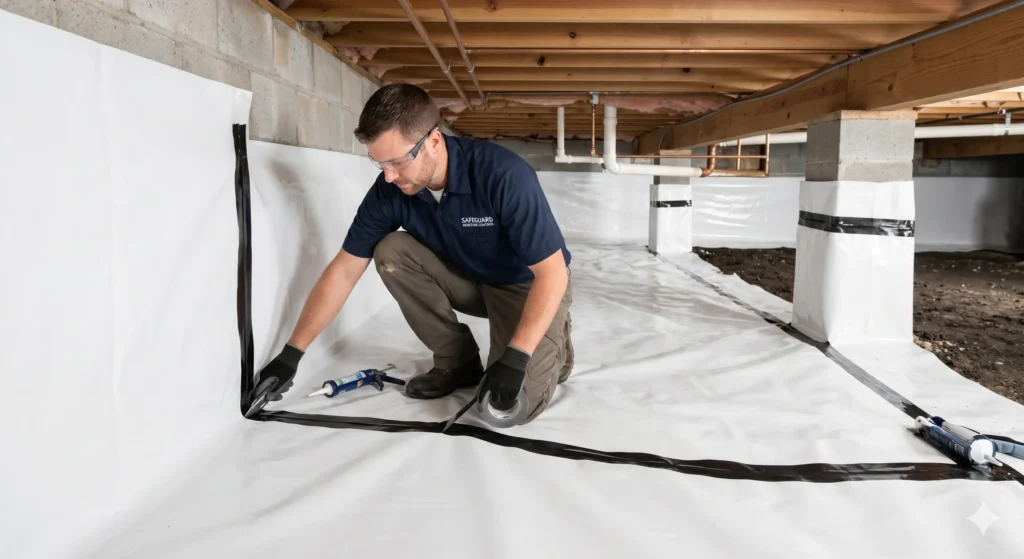
A vapor barrier is the layer that stops moisture from rising out of the bare earth in your crawl space. In Moore County, even the fast-draining sands of the Pinehurst Formation stay damp below the surface, and that ground moisture evaporates upward continuously, feeding the humidity that rots framing and feeds mold. A proper vapor barrier, not the thin, torn 6-mil sheet found in many older local homes, covers the soil and is sealed to the foundation walls and piers to interrupt that capillary path. It’s a foundational step in moisture control: on its own for drier spaces, or as the ground layer of a full encapsulation. For many of the county’s pre-1990 crawl spaces, replacing a failed barrier is the first real improvement.
Crawl Space Insulation
Crawl space insulation affects both comfort and energy bills, and in many Moore County homes it’s failing. The pink fiberglass batts stapled under the subfloor in older houses absorb the region’s humidity, grow heavy, and sag or fall onto the dirt, where they do nothing but hold moisture and harbor pests. Proper crawl space insulation, installed as part of a dry, sealed space, keeps floors warmer in winter, eases the load on the HVAC system, and helps hold steadier indoor temperatures. The right approach depends on whether the crawl space is vented or sealed: in a modern closed crawl, insulation typically moves to the foundation walls rather than the subfloor. Done correctly, it’s also where Duke Energy’s efficiency rebates can come into play.
Mold Remediation
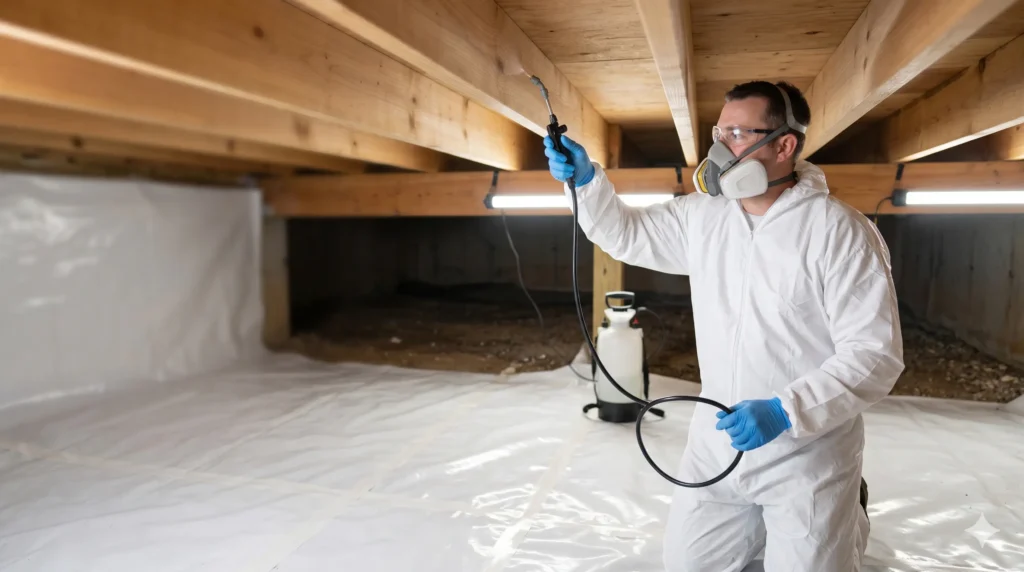
When a crawl space stays damp long enough, mold follows, and in Moore County’s humid climate it’s one of the most common reasons homeowners first look under the house. Mold colonizes framing once sub-floor humidity sits above about 60 percent and wood moisture climbs past the high teens, leaving the black, green, or white growth found on joists and subfloors in many older local homes. Remediation removes that growth safely and, just as importantly, addresses the moisture that caused it. Cleaning mold without fixing the source only buys time. Because the stack effect carries crawl space air upward into living spaces, crawl space mold isn’t just a structural issue; it’s an indoor-air-quality one that can aggravate allergies and asthma upstairs.
Foundation Code Compliance
We help coordinate assessments and technical guidance to keep your crawl space aligned with NC Residential Code R409 unvented crawl space standards, which govern how sealed crawl spaces must be conditioned in Moore County properties.

Ready for a Free Moore County Crawl Space Inspection?
Not sure what’s going on under your home? A free crawl space inspection gives you a clear, no-pressure picture of the moisture, drainage, and any damage below — and the options for addressing it.